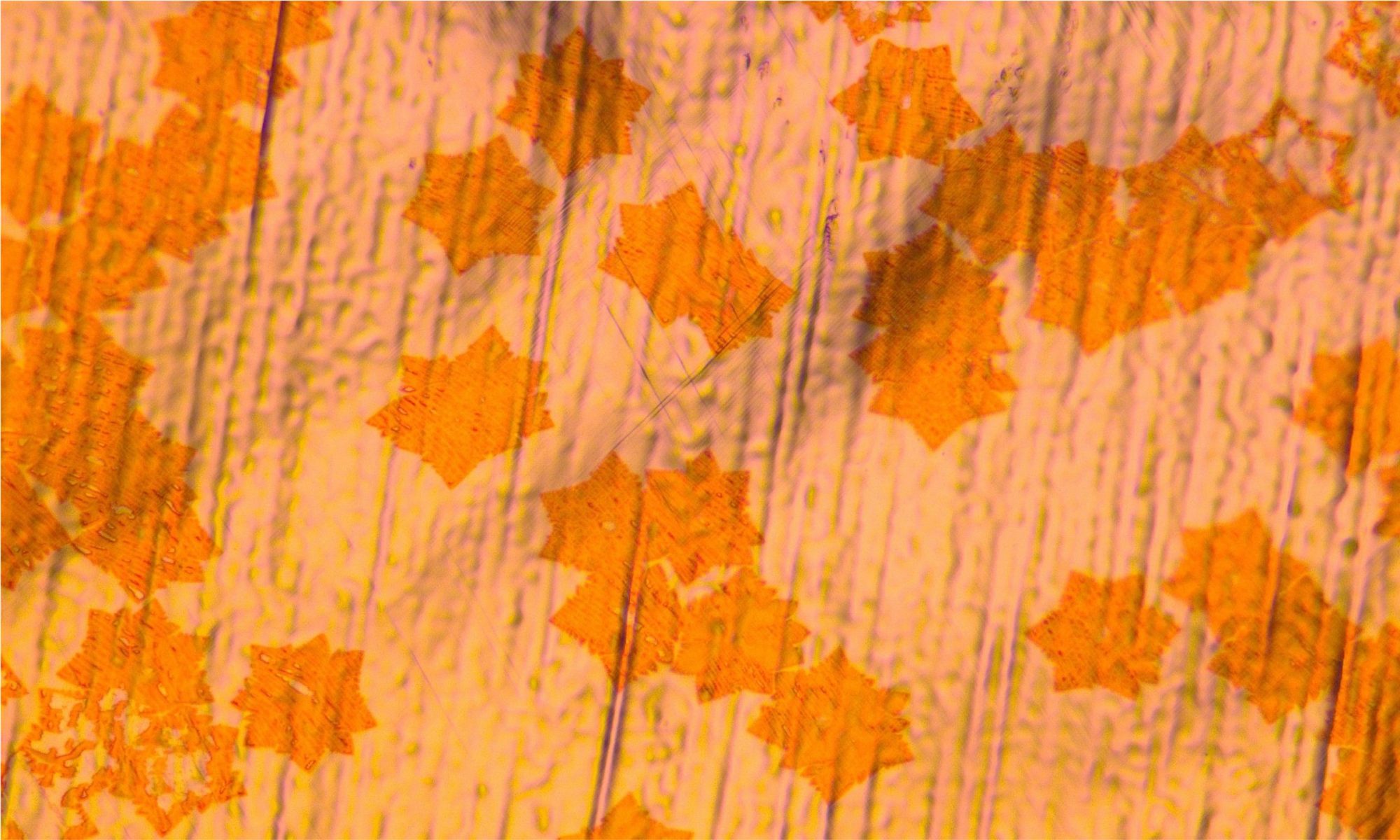
The Chair for Electronic Devices (ELD) at RWTH Aachen University is going to embark on a joint research project with the group of Prof. Alexei N. Nazarov at the Lashkaryov Institute of Semiconductor Physics (ISP) in Kyiv.
Continue reading “Researching MoS2-based MOSFETS – together with Ukraine”A scalable method to reduce the contact resistance of graphene
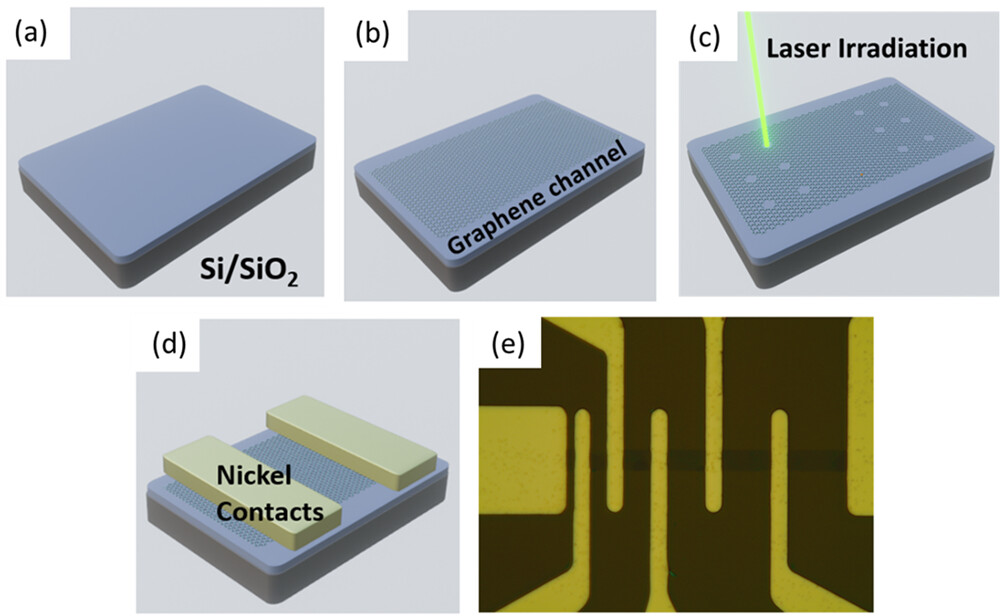
The exceptional electronic properties of graphene make it a material with large potential for low-power, high-frequency electronics. However, the performance of a graphene-based device depends not only on the properties of the graphene itself, but also on the quality of its metal contacts. The lack of effective and manufacturable approaches to establish good ohmic contacts to a graphene sheet is one of the factors that limit today the full application potential of graphene technology.
First demonstration of a CMOS inverter based on transition metal dichalcogenides on a flexible substrate
Researchers of the Aachen Graphene and 2D Materials Center have demonstrated the first CMOS inverter based on transition metal dichalcogenides (TMDC) on a flexible substrate, using two distinct TMDC materials, MoS2 and WSe2.
Continue reading “First demonstration of a CMOS inverter based on transition metal dichalcogenides on a flexible substrate”An automatic flake-search tool for 2D materials
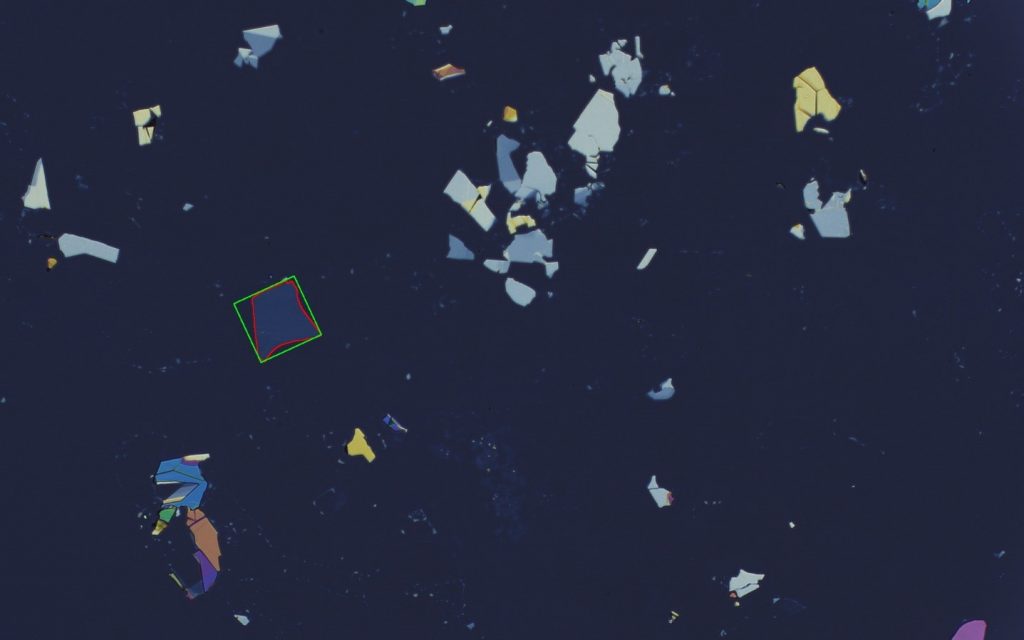
Researchers at the Aachen Graphene & 2D Materials Center have released an open-source platform to automatically identify and classify exfoliated flakes of two-dimensional (2D) materials on a substrate, shortening one of the most time-consuming and tedious tasks in the study of 2D materials.
A workshop in Aachen on “2D Materials for Future Electronics”
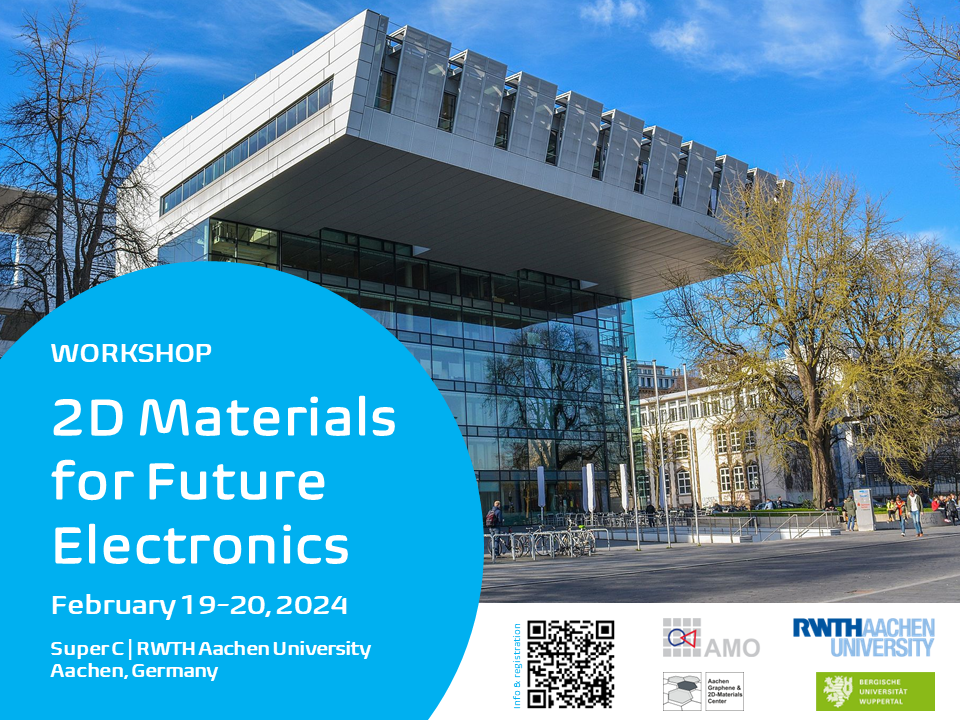
AMO GmbH and the Aachen Graphene & 2D Materials Center are organizing a two-day workshop on “2D Materials for Future Electronics”, in cooperation with RWTH Aachen University and the University of Wuppertal.
First observation of coherent charge dynamics in graphene quantum dots
In a recent study published in Nature Communications, researchers from RWTH Aachen University and Forschungszentrum Jülich have reported the observation of coherent charge oscillations in bilayer graphene quantum dots. This marks a significant milestone on the way to spin and valley qubits in a two-dimensional material system.
High quality hexagonal Boron Nitride – made in Aachen
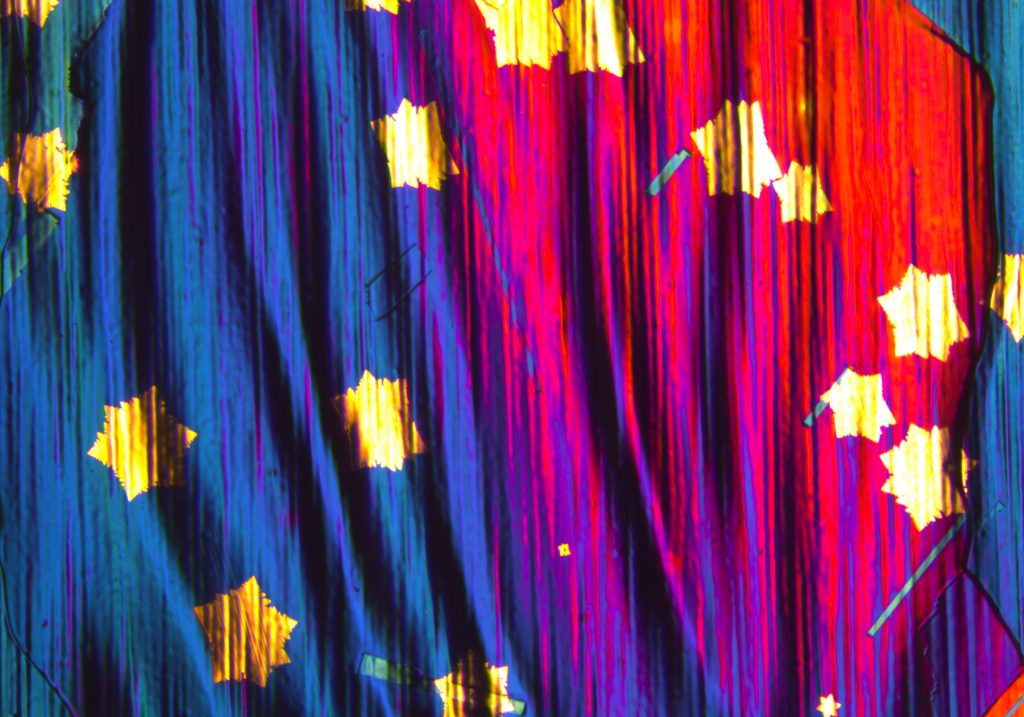
Good news for the community working on two-dimensional materials in Europe: a team of researchers at RWTH Aachen University has successfully implemented the process for growing high-quality hexagonal Boron Nitride at atmospheric pressure and high temperature, increasing the resilience of the supply chain of this unique material.
Congratulations to Prof. Annika Kurzmann
Prof. Annika Kurzmann has been appointed ML4Q Professor for Experimental Solid-State Physics at the University of Cologne.
Continue reading “Congratulations to Prof. Annika Kurzmann”Congratulations to Prof. Alwin Daus
Alwin Daus has been appointed Junior Professor at the Department of Microsystems Engineering (IMTEK) at University of Freiburg.
Continue reading “Congratulations to Prof. Alwin Daus”A scalable pathway for the mechanical transfer of graphene grown by CVD
Nowadays it is possible to grow high-quality graphene on large scale using chemical vapor deposition (CVD). What remains a major bottleneck for the industrialization of the material is the transfer of graphene from the growth substrate to a target one. A team of researchers from the University of Cambridge and RWTH Aachen University has now developed a methodology for optimizing simultaneously the growth and the transfer process, showing that it is possible to dry-transfer graphene with high-yield, if the crystallographic orientation of the growth surface is chosen appropriately.
(© Stampfer Lab, RWTH Aachen University)